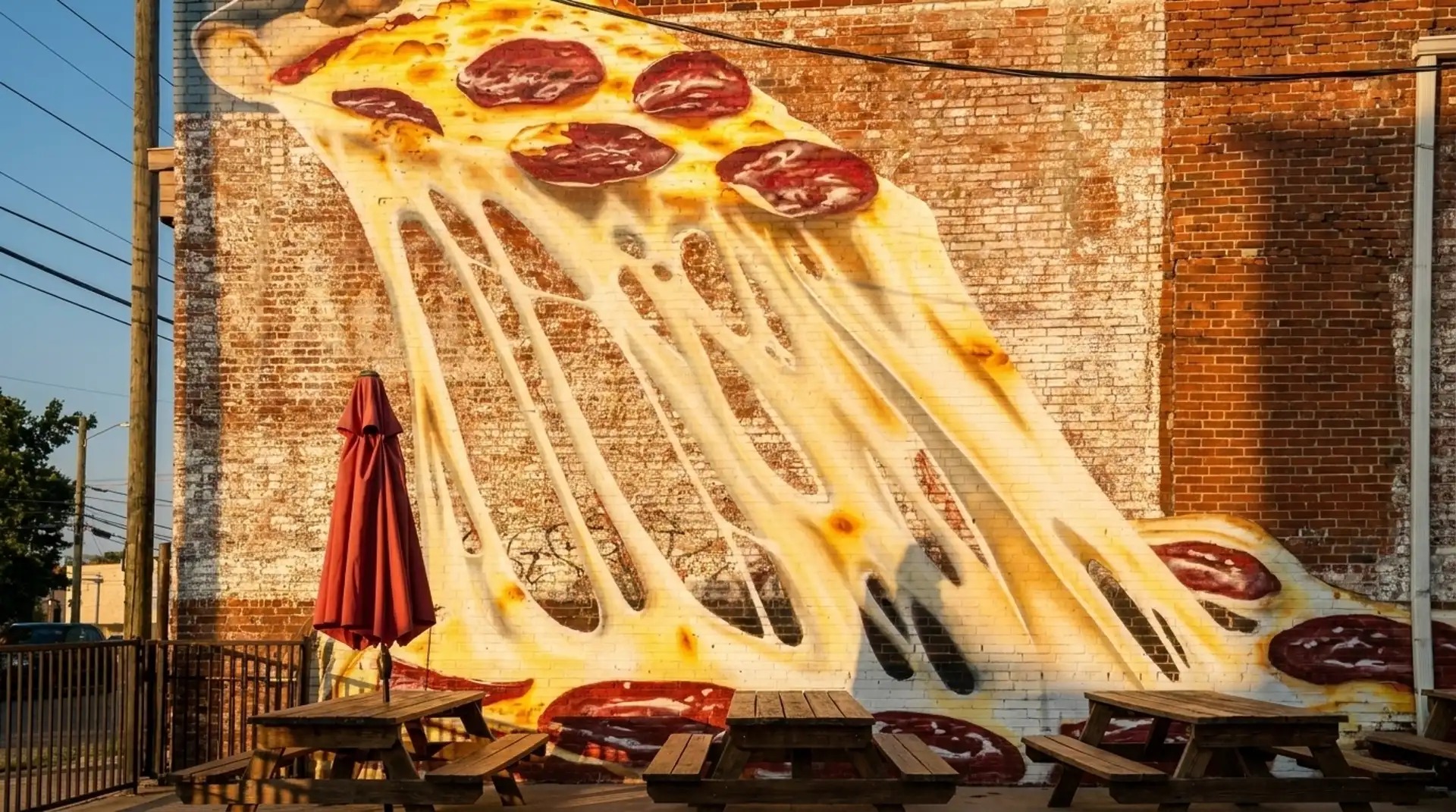
The Good Reason Your Restaurant Bill May Get Even More Expensive
Nearly half of all restaurants are struggling. Here's one big way to help.
Food as a verb thanks
for sponsoring this series

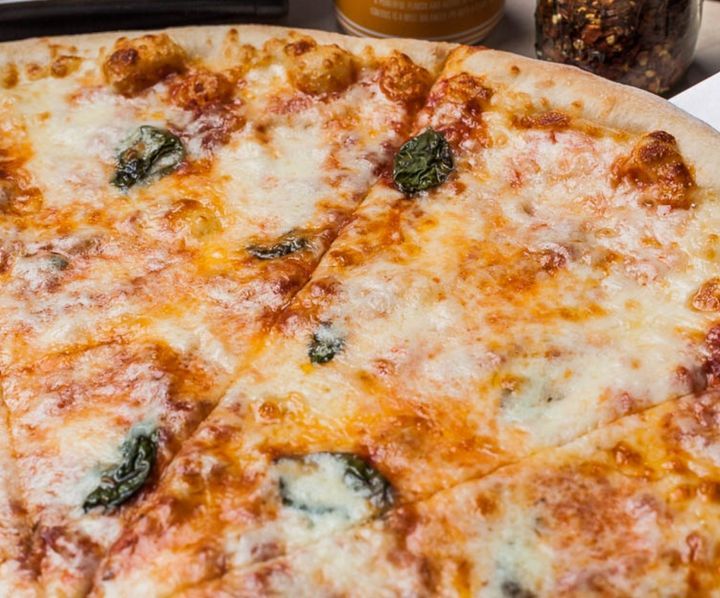
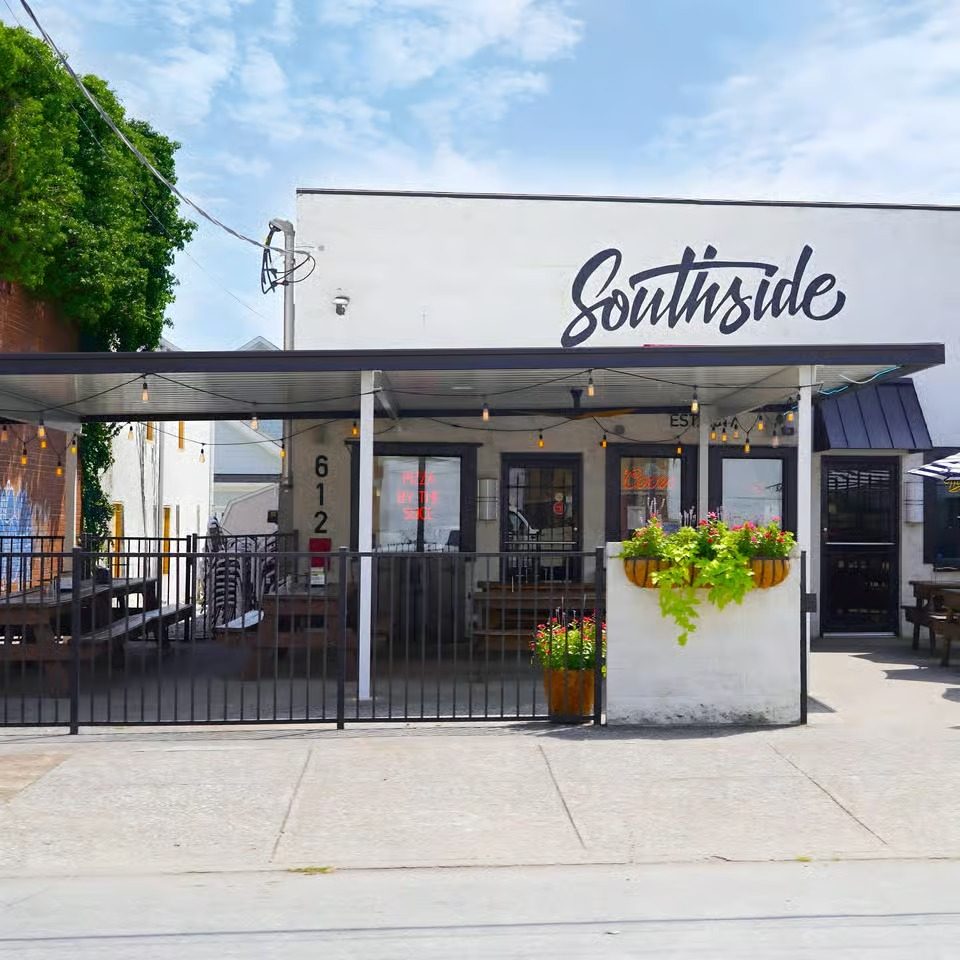
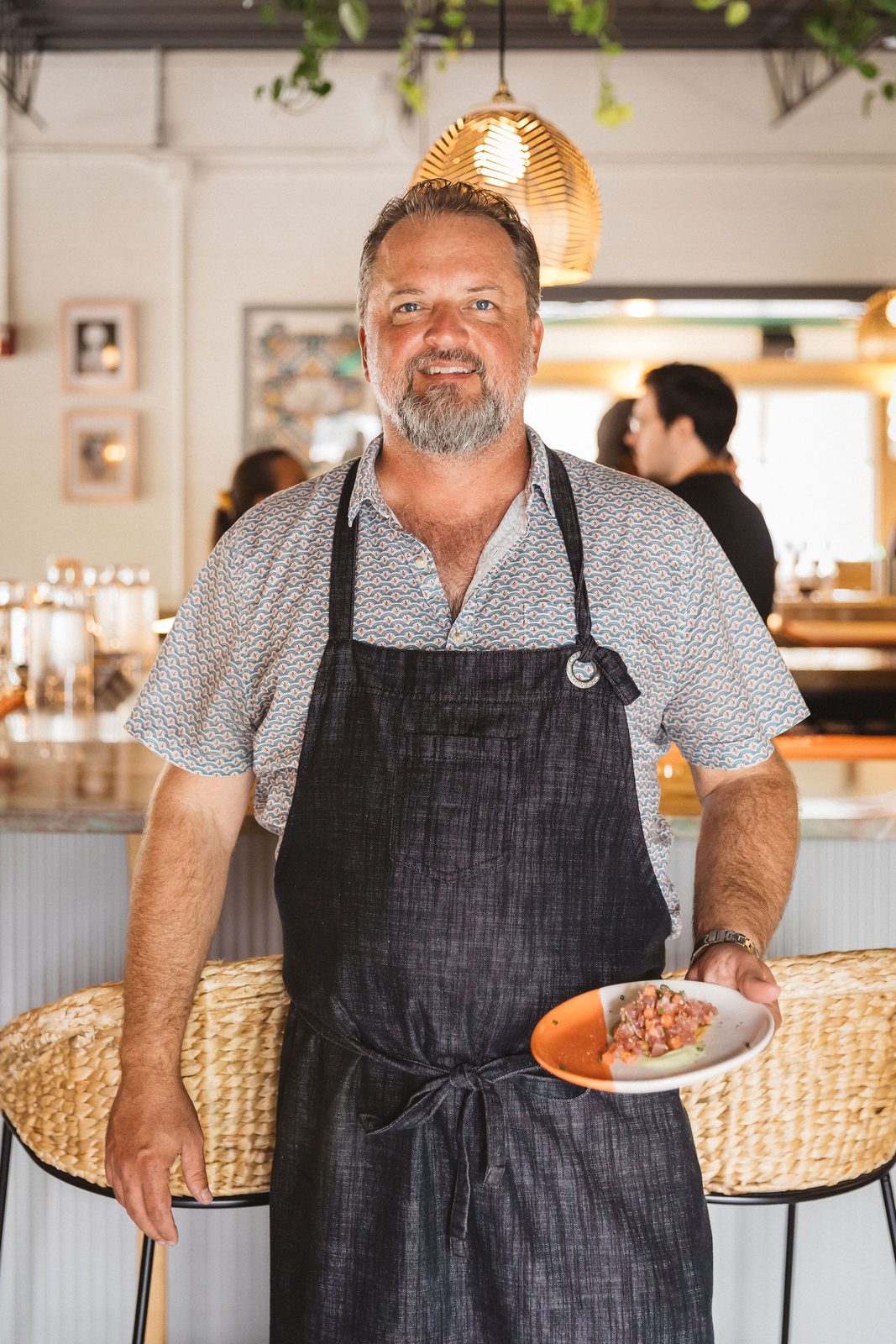
In 2017, Eric Taslimi — longtime chef and restaurateur — opened Southside Pizza with a bold vision: tomatoes from Italy, the best whole pepperoni possible, sausage ground in-house.
"We make our own meatballs. We make our own sauce. We age our dough 72 hours before we use it," he said.
Then came Covid. And inflation. And the cost of goods went interstellar high.
So, seven years later — in 2024 — Taslimi made another bold decision. In fact, it put him at the forefront of a national movement. It may have been one of the boldest decisions in our city's recent restaurant history.
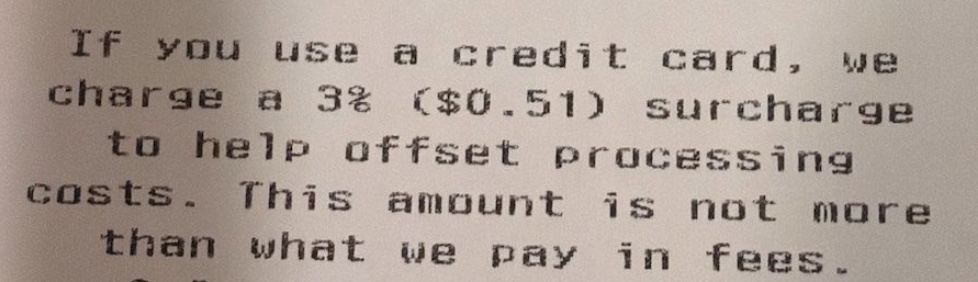
At the end of every bill or tab, he added a 3% surcharge.
"We pass on a 3% credit card processing fees onto the customer if you're paying with a card," he said.
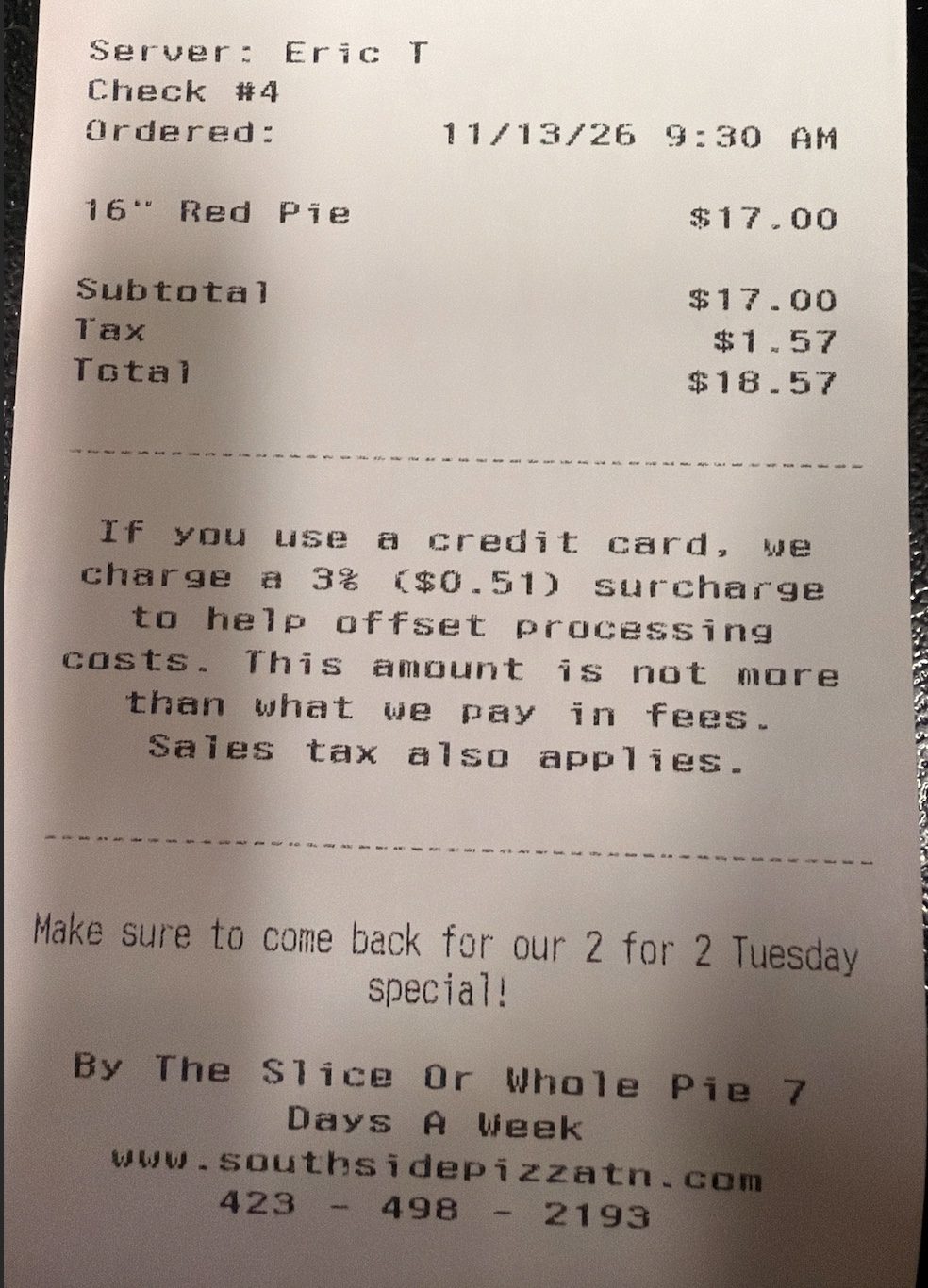
It's a growing trend in other parts of the US: restaurants are no longer able or willing to absorb the 3% fee that goes to credit card companies every time a guest uses a card to pay.
Let's say that again, just in case: every single time we pay with a credit card, the big credit card companies take 3% of that purchase. Your bill is $100?
The restaurant gets $97.
And Visa gets $3.
Taslimi had his eye on Florida, where it's increasingly common for restaurants to pass this 3% back onto guests.
He also had his eye on his balance sheet. The 3% processing fees — $3 taken out of every $100 earned — are among his largest expenses.
"After labor and food, it's our biggest cost," he said.
If you eat in Chattanooga restaurants, you need to know two singular facts. The First Big Fact? The industry is in trouble. Big trouble. Here and nationwide.
"The business model isn't working. We're struggling to stay alive. And in fact, we don't know if we can," said Brett Anderson, a New York Times journalist, summing up what he's hearing from restaurant owners across the country.
His interview is part of The Daily's episode called "The Restaurant Industry is Broken. Can It Be Fixed?" It hits hard, citing a National Restaurant Association study that says 42% of all American restaurant owners admitted their restaurants weren't making a profit last year.
"Yeah, basically means if you walk into a restaurant, there's an almost half chance that it's not making any money," Anderson said.
The Second Big Fact?
Every time we pay with a credit card, we are sending 3% of our money not to the chef or back-of-the-house team or your fabulous server, but to Visa, Mastercard, AmExpress.
For years, restaurants just ate this surcharge, lumping it in in their costs.
But with restaurants facing thinner margins and the pressure cooker of rising costs everywhere, some are penciling out how much money they'd save if they passed the 3% onto credit-card-paying customers.
And some, like Eric and Southside, made the decision.
"We haven't had anyone really say anything in terms of a negative impact," he said. "The general public sees how hard it is to run an independent business."
He mentions jarring figures: food and labor costs are up 35% since 2019.
"Food costs, labor costs, every single cost, paper goods, all of it," he said. "For a business that's already has tiny margins, it's tough."
There are usually two ways of responding:
Cut costs. Buy cheaper goods. Pay your team less.
Or raise menu prices.
At Southside, redirecting the 3% has allowed them to keep prices steady while staying faithful to a high standard.
"We just thought: the public would appreciate this. We hope they see it's not us, but the credit card processors that are the issue. It's not the small little restaurant guy."
For restaurateurs, there's a line of no-return: service or ingredients turn inferior, and guests stop coming. Prices become out-of-reach, and guests stop coming.
These are dials and knobs constantly being turned by owners across the country. (The Daily even describes a Seattle owner who stop putting prices on his menu.)
When he opened Slick's, he committed to an everything-made-from-scratch ideal which allowed them to charge $19 for a burger. The model worked until it didn't.
"At some point, you'll only pay so much for a burger, no matter how good it is. There's just a limit how many times you can go eat lunch at Slick's if burgers are $19," he said.
Southside Pizza may be pioneering the credit card processing redirect regionally, but it's still a taboo topic for some owners. One chef wouldn't speak on the record about this.
Another certainly did.
"It's coming," said Chef Erik Niel.
A few weeks before receiving three Michelin honors, the chef-owner of Easy Bistro, Main Street Meats and Little Coyote was listening to the same New York Times podcast.
It is a dizzying, confusing conundrum: at a time when so many people are moving here, when Chattanooga's tourism is idolized across the nation, when our restaurant scene is the best its every been ... we also live in a landscape where nearly half of all restaurants are struggling to keep their doors open.
"After Covid, it's been the Wild West," said Niel. "We can't keep up with prices. The margins get squeezed every moment of every day in this business.
"You can't look at one particular thing. It's whack-a-mole. The cost of goods, durable goods, supplies, rent, insurance, power, gas, you name it.
"There's no end."
He and wife and partner Amanda are considering the 3% processing fee for their three restaurants.
It would add a more robust bottom line, but also the ability to provide something precious and good.
"Health insurance for my team," he said. "I don't think that covers it, but it makes it a lot easier."
Like Taslimi, he talked about the line of no-return on menu prices.
"As soon as you cross that paradigm of being too expensive for the market, you're fucked. You have to overdeliver on value," he said.
For the Niels, the compass always points to the same north.
"Hospitality," he said. "It can't just be the price of the food or the price of the drink. They have to get something out of the experience that is more than that. That is of value. They have to be entertained.
"That is hospitality."
This isn't just for Michelin restaurants. He mentioned Chick-fil-A.
"They've probably gone up 50% in the last five years, but everybody goes there. They give a shit when you drive-thru. They nailed the hospitality piece a long time ago. The chicken sandwich is good, but it ain't that fucking good."
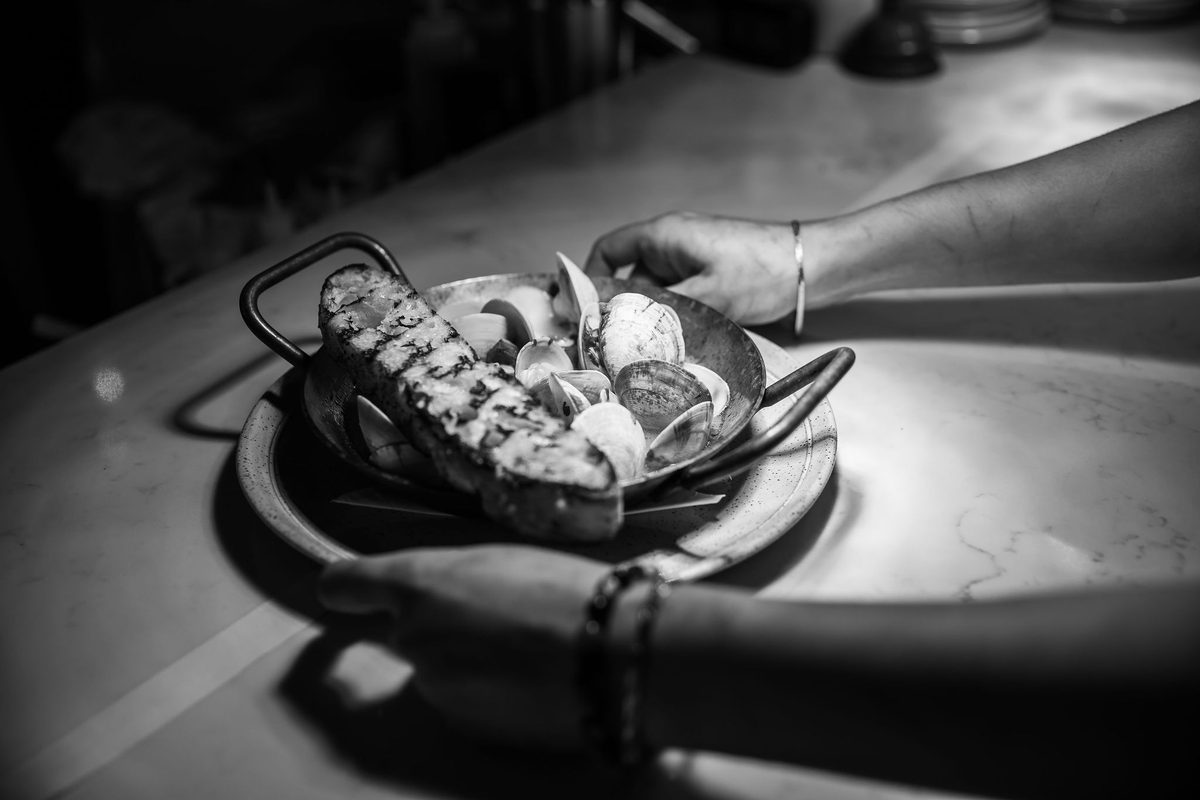
Earlier this month, Eric Taslimi made an announcement: he's opening a new pizza restaurant in the spring of 2027.
He'll take the model he's built at Southside onto Signal Mountain. Top-shelf ingredients, devotion to his team, love for his guests and guts to do what not many others are doing.
Yet.
"You need a really good team around you. Take care of them and nurture that and hopefully you can make it out there. But it's very tough," he said. "Be good to your people and build a really great team and think outside the box."
Story ideas, questions, feedback? Interested in partnering with us? Email: david@foodasaverb.com
This story is 100% human generated; no AI chatbot was used in the creation of this content.
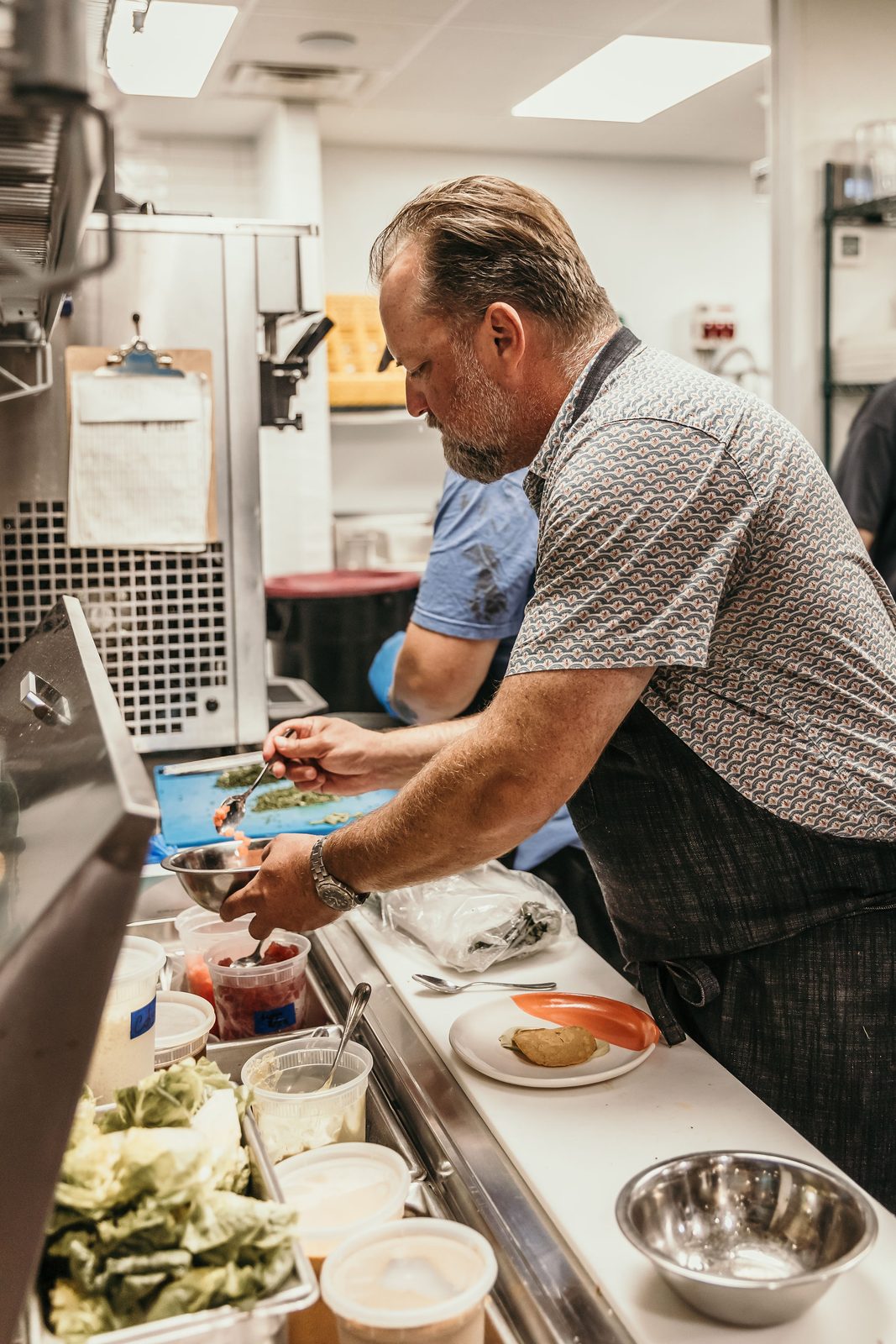
Contributed photos of Southside Pizza from Eric Taslimi.
In 2017, Eric Taslimi — longtime chef and restaurateur — opened Southside Pizza with a bold vision: tomatoes from Italy, the best whole pepperoni possible, sausage ground in-house.
"We make our own meatballs. We make our own sauce. We age our dough 72 hours before we use it," he said.
Then came Covid. And inflation. And the cost of goods went interstellar high.
So, seven years later — in 2024 — Taslimi made another bold decision. In fact, it put him at the forefront of a national movement. It may have been one of the boldest decisions in our city's recent restaurant history.
At the end of every bill or tab, he added a 3% surcharge.
"We pass on a 3% credit card processing fees onto the customer if you're paying with a card," he said.
It's a growing trend in other parts of the US: restaurants are no longer able or willing to absorb the 3% fee that goes to credit card companies every time a guest uses a card to pay.
Let's say that again, just in case: every single time we pay with a credit card, the big credit card companies take 3% of that purchase. Your bill is $100?
The restaurant gets $97.
And Visa gets $3.
Taslimi had his eye on Florida, where it's increasingly common for restaurants to pass this 3% back onto guests.
He also had his eye on his balance sheet. The 3% processing fees — $3 taken out of every $100 earned — are among his largest expenses.
"After labor and food, it's our biggest cost," he said.
If you eat in Chattanooga restaurants, you need to know two singular facts. The First Big Fact? The industry is in trouble. Big trouble. Here and nationwide.
"The business model isn't working. We're struggling to stay alive. And in fact, we don't know if we can," said Brett Anderson, a New York Times journalist, summing up what he's hearing from restaurant owners across the country.
His interview is part of The Daily's episode called "The Restaurant Industry is Broken. Can It Be Fixed?" It hits hard, citing a National Restaurant Association study that says 42% of all American restaurant owners admitted their restaurants weren't making a profit last year.
"Yeah, basically means if you walk into a restaurant, there's an almost half chance that it's not making any money," Anderson said.
The Second Big Fact?
Every time we pay with a credit card, we are sending 3% of our money not to the chef or back-of-the-house team or your fabulous server, but to Visa, Mastercard, AmExpress.
For years, restaurants just ate this surcharge, lumping it in in their costs.
But with restaurants facing thinner margins and the pressure cooker of rising costs everywhere, some are penciling out how much money they'd save if they passed the 3% onto credit-card-paying customers.
And some, like Eric and Southside, made the decision.
"We haven't had anyone really say anything in terms of a negative impact," he said. "The general public sees how hard it is to run an independent business."
He mentions jarring figures: food and labor costs are up 35% since 2019.
"Food costs, labor costs, every single cost, paper goods, all of it," he said. "For a business that's already has tiny margins, it's tough."
There are usually two ways of responding:
Cut costs. Buy cheaper goods. Pay your team less.
Or raise menu prices.
At Southside, redirecting the 3% has allowed them to keep prices steady while staying faithful to a high standard.
"We just thought: the public would appreciate this. We hope they see it's not us, but the credit card processors that are the issue. It's not the small little restaurant guy."
For restaurateurs, there's a line of no-return: service or ingredients turn inferior, and guests stop coming. Prices become out-of-reach, and guests stop coming.
These are dials and knobs constantly being turned by owners across the country. (The Daily even describes a Seattle owner who stop putting prices on his menu.)
When he opened Slick's, he committed to an everything-made-from-scratch ideal which allowed them to charge $19 for a burger. The model worked until it didn't.
"At some point, you'll only pay so much for a burger, no matter how good it is. There's just a limit how many times you can go eat lunch at Slick's if burgers are $19," he said.
Southside Pizza may be pioneering the credit card processing redirect regionally, but it's still a taboo topic for some owners. One chef wouldn't speak on the record about this.
Another certainly did.
"It's coming," said Chef Erik Niel.
A few weeks before receiving three Michelin honors, the chef-owner of Easy Bistro, Main Street Meats and Little Coyote was listening to the same New York Times podcast.
It is a dizzying, confusing conundrum: at a time when so many people are moving here, when Chattanooga's tourism is idolized across the nation, when our restaurant scene is the best its every been ... we also live in a landscape where nearly half of all restaurants are struggling to keep their doors open.
"After Covid, it's been the Wild West," said Niel. "We can't keep up with prices. The margins get squeezed every moment of every day in this business.
"You can't look at one particular thing. It's whack-a-mole. The cost of goods, durable goods, supplies, rent, insurance, power, gas, you name it.
"There's no end."
He and wife and partner Amanda are considering the 3% processing fee for their three restaurants.
It would add a more robust bottom line, but also the ability to provide something precious and good.
"Health insurance for my team," he said. "I don't think that covers it, but it makes it a lot easier."
Like Taslimi, he talked about the line of no-return on menu prices.
"As soon as you cross that paradigm of being too expensive for the market, you're fucked. You have to overdeliver on value," he said.
For the Niels, the compass always points to the same north.
"Hospitality," he said. "It can't just be the price of the food or the price of the drink. They have to get something out of the experience that is more than that. That is of value. They have to be entertained.
"That is hospitality."
This isn't just for Michelin restaurants. He mentioned Chick-fil-A.
"They've probably gone up 50% in the last five years, but everybody goes there. They give a shit when you drive-thru. They nailed the hospitality piece a long time ago. The chicken sandwich is good, but it ain't that fucking good."
Earlier this month, Eric Taslimi made an announcement: he's opening a new pizza restaurant in the spring of 2027.
He'll take the model he's built at Southside onto Signal Mountain. Top-shelf ingredients, devotion to his team, love for his guests and guts to do what not many others are doing.
Yet.
"You need a really good team around you. Take care of them and nurture that and hopefully you can make it out there. But it's very tough," he said. "Be good to your people and build a really great team and think outside the box."
Story ideas, questions, feedback? Interested in partnering with us? Email: david@foodasaverb.com
This story is 100% human generated; no AI chatbot was used in the creation of this content.
Contributed photos of Southside Pizza from Eric Taslimi.
Food as a verb thanks our story sponsor:
Food as a Verb Thanks our sustaining partner:
Food as a verb thanks our story sponsor:
Join our table

keep reading